Every morning, she woke before the sun.
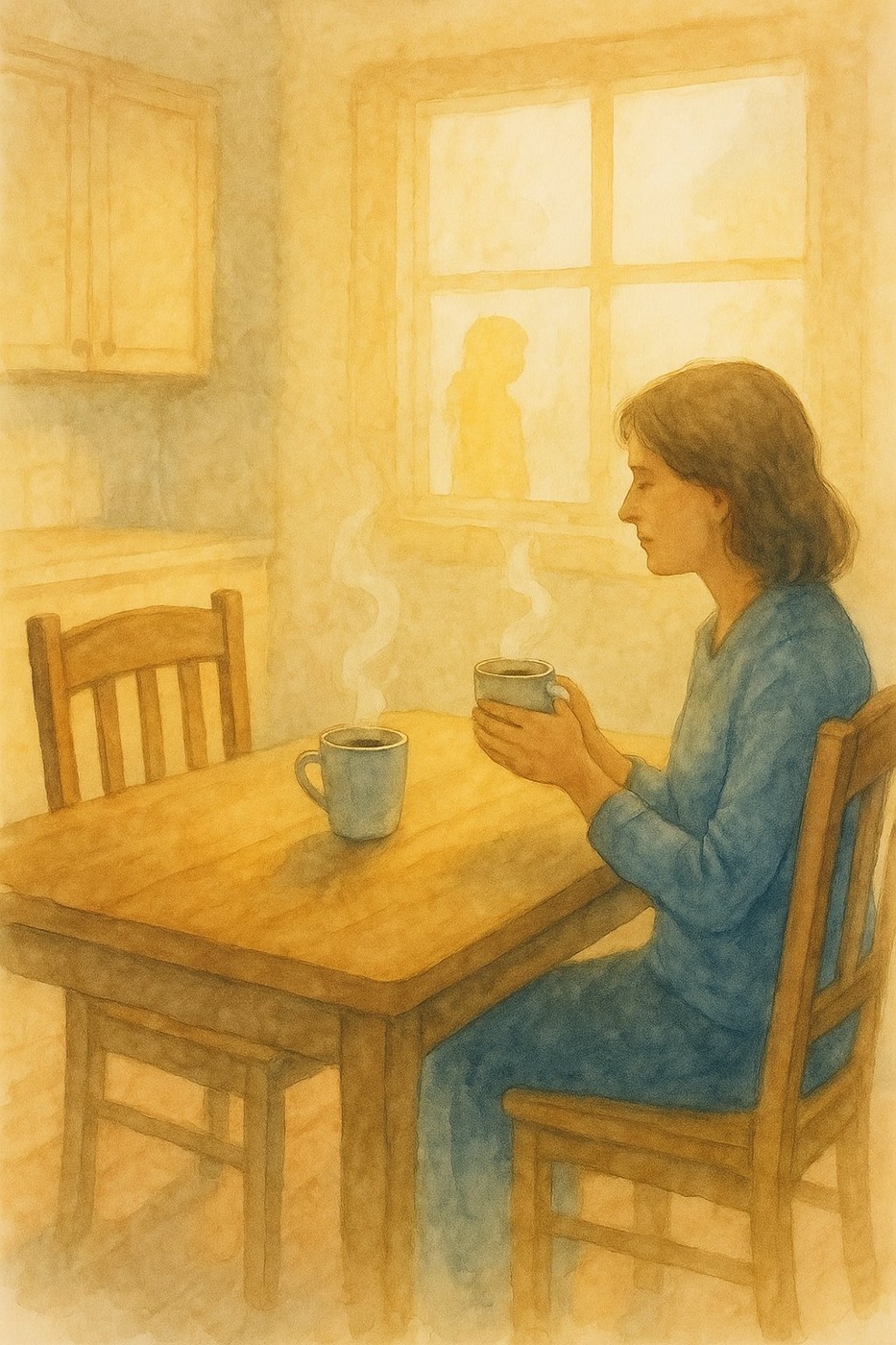
She combed her daughter's hair, slipped a sandwich into her bag, tucked in one piece of fruit, and kissed her goodbye at the door. Then she stood in the quiet of the house and listened to it settle around her. When the stillness felt complete, she sat down with her coffee, letting the warmth carry her gently into the day.
Time moved quickly, the way it always does when you are not looking.
At sixteen, her daughter asked for her own cup. It startled her at first, this small request that felt larger than it sounded. But she knew the girl would find a way to taste it sooner or later, so she poured one without making a ceremony of it. The first sip was bitter. The girl wrinkled her nose and reached for the sugar, spoon after spoon, until the coffee became something she could bear. The mother watched and smiled, understanding that it was never really about the coffee. It was about belonging, about stepping into the rituals of her friends, about feeling that the world of grown-ups was no longer entirely out of reach.
From that morning on, everything changed quietly.
Two cups sat on the table. Between sips, mother and daughter shared the small talk of the day ahead, their words unhurried, stitched together with steam and laughter and the ease of people who know each other well enough not to perform.
Those mornings became something the mother did not name while they were happening, because the things we treasure most are often the ones we forget to notice until they are gone.
Then came university. The daughter bought a travel cup, and the mornings grew shorter, rushed with bags and deadlines and the energy of someone stepping into a larger life. But still, two cups were poured. One went out the door. One stayed behind.
Then she graduated. She moved out, began her own life in her own kitchen with her own morning rituals. The house grew quiet again, the way it had before, though it was a different kind of quiet now. Deeper. More permanent.
Still, every morning, the mother brewed two cups.
She drank hers slowly. She let the other cool untouched on the table across from her. She imagined her daughter's voice, her quick remarks, the way her laughter used to fill the kitchen without effort. And sometimes she thought of that very first cup, too bitter, too sweet, stirred into something bearable by a girl who just wanted to belong.
Two cups remained a ritual. One was for the present. The other was for memory.
And memory, though it ached sometimes, made the silence not empty but full, full of everything that had happened in that kitchen, everything that had been said and laughed and shared over something as simple as coffee and time.