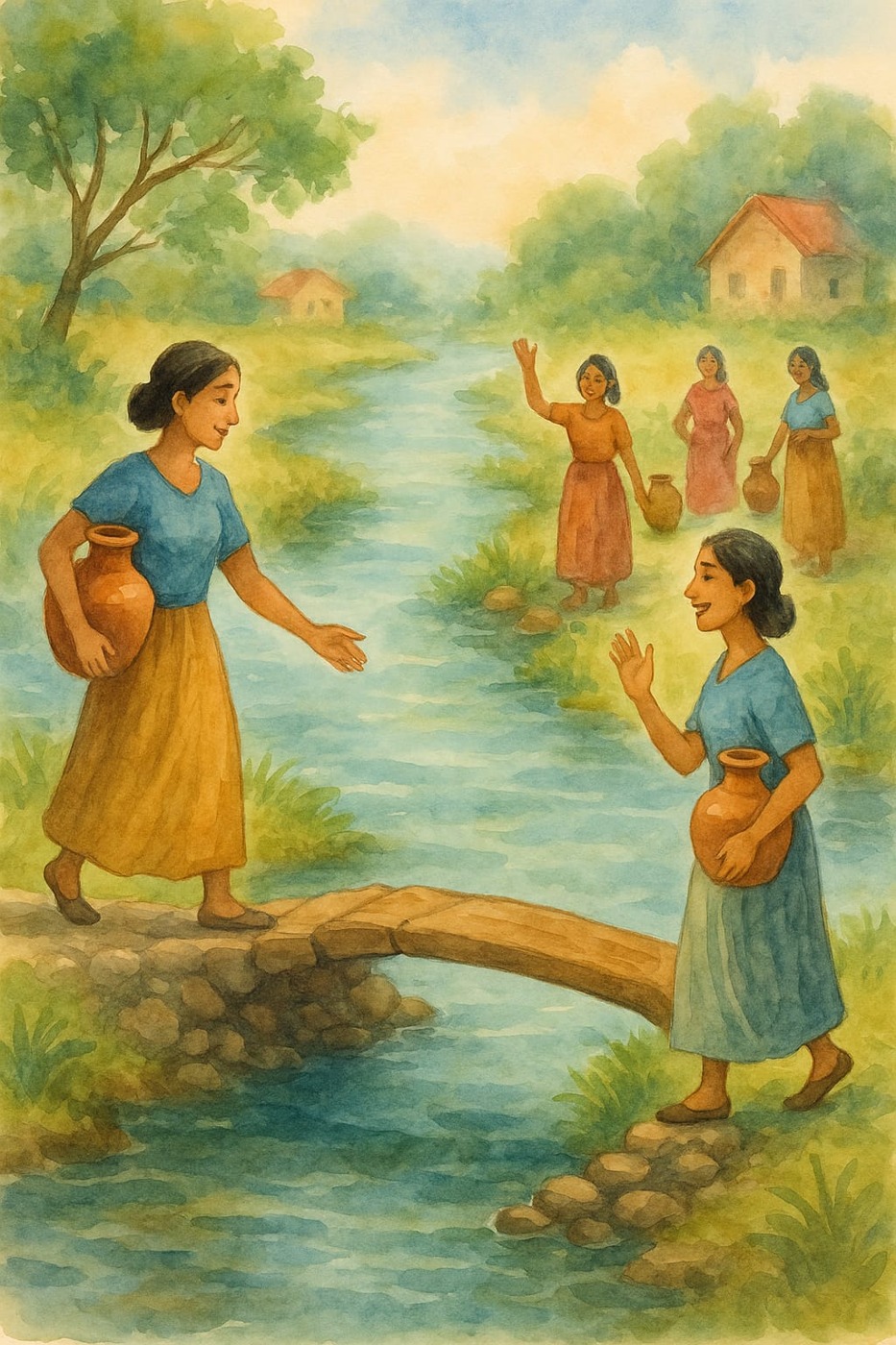
Every morning, she walked to the river with her jar.
The women of her village had done the same for generations, following the same path, filling the same water, carrying it home the same way.
The rhythm was even and familiar. But what made the journey special were the people she met along the way. She stopped to greet them, shared a smile, exchanged small pieces of news, and her warmth had made her known as someone easy to talk to, someone who made the walk feel lighter for others.
One morning, as she bent to lift her jar, she noticed women on the far bank doing the same. They were close enough to see clearly, yet far enough to feel like strangers. She straightened up and raised her hand in a wave. A few waved back. Some did not. She waved anyway.
The next day she called a cheerful hello across the water. A few voices carried the word back. She smiled and called again.
Day after day, the exchanges grew. A question shouted over the current, an answer carried back on the breeze, laughter jumping from one bank to the other like a stone skipping across the surface. She wanted to know them better, to close the distance that separated their lives, which was, she had begun to realise, smaller than it looked.
She walked upstream to where the river narrowed. She began moving stones to the edge, one by one, not to block the water but to reach closer to the other side. Across the river, the women noticed. Without a word being spoken, they began placing stones at their own edge. Slowly, unhurriedly, the gap between them shrank.
One morning she brought a fallen log, thick and strong enough to rest across the stones. She laid it carefully over the stream. Then she stepped onto it.
On the other side, waiting hands reached out to support her.
The bridge was simple, nothing more than stones and wood shaped by ordinary hands. Yet it carried far more than her jar. From that morning on, the river no longer stood between two villages. It simply ran beneath a place where people had chosen to meet.