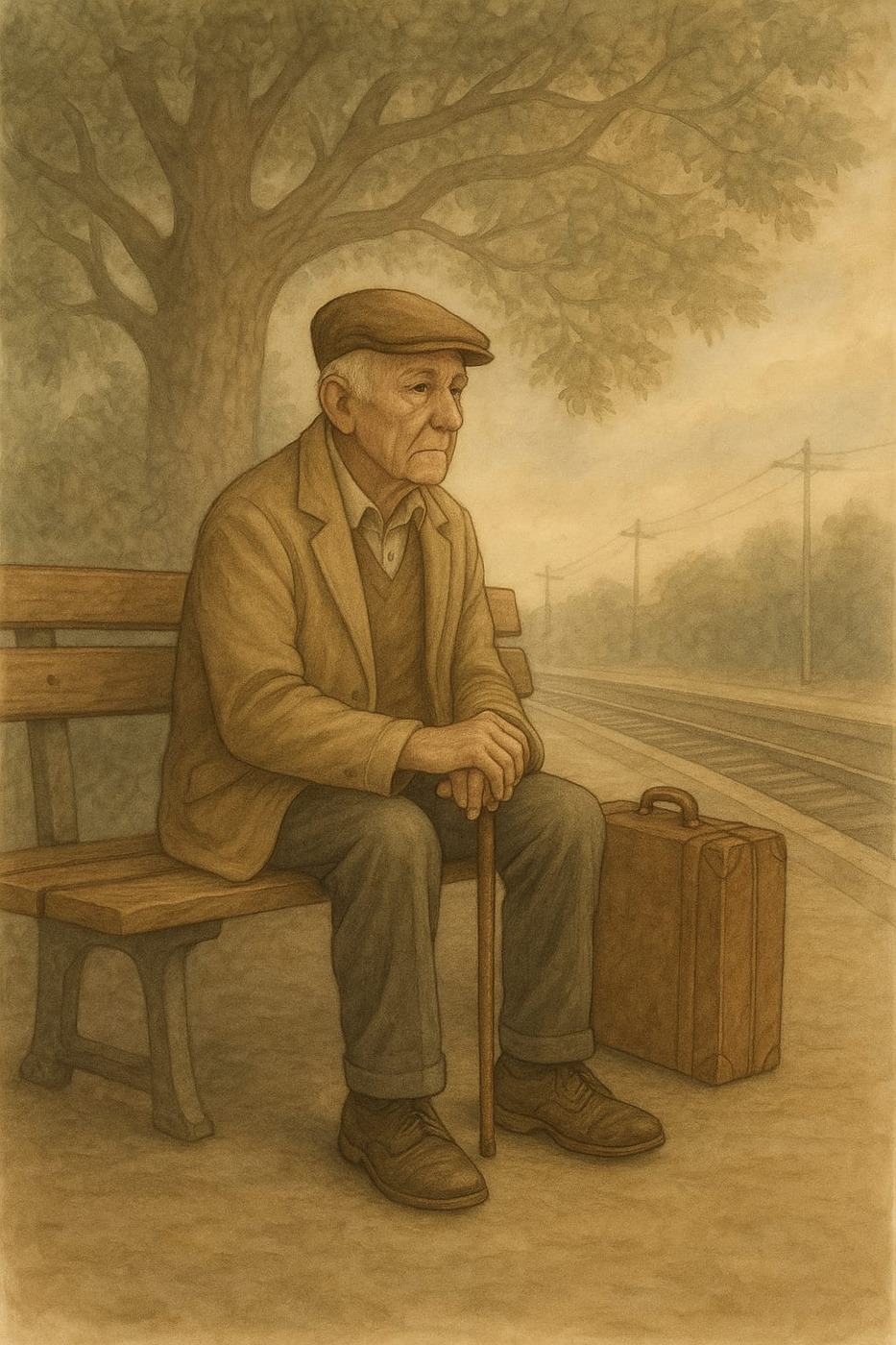
He had five children, each grown now, each with a life of their own.
His wife had passed long ago, when the children were still young, some still in school, others just beginning university. From that moment, his days belonged entirely to them. There was no discussion, no decision to be made. It was simply what needed to be done, and so he did it.
He rose before dawn, prepared breakfasts, tied shoelaces, packed bags, and dropped the little ones at school before heading to work. In the evenings there were meals to cook, laundry to fold, lessons to
check, and a house to keep running so that tomorrow would begin smoothly. He knew no weekends, no holidays, no pauses. Only the quiet, unbroken rhythm of duty and love, each one indistinguishable from the other.
One by one, they left. One by one, they built homes of their own. He was proud, deeply and genuinely proud, though each departure left the house a little quieter than before. Visits grew rare. Some lived far. Others were swallowed by the demands of their new families, a cycle of life he understood better than anyone.
Now he was the traveller.
You could see him at the station, boarding a train to visit one daughter and her children. Another day, at the airport, setting off to see a son. He was always welcomed, always given a bed and a warm plate at the table. But he could feel the quiet weight of his own presence in their homes. They tried their best to make him comfortable, and he loved them for it. Yet the warmth was not the same as the warmth he had once given without measure or thought. He was a guest in homes that had grown around lives he was no longer at the centre of.
They looked at him now as fragile, though he had never once felt weak. Their concern was full of tenderness, but also a careful distance, as though he belonged more to the past than to the present they were busy building. He noticed it, and said nothing. He simply smiled, the way a man smiles when he understands something that cannot be explained to those who have not yet lived it.
He remembered his mother's words, spoken to him long ago in a voice he could still hear clearly: a parent can raise a hundred children, but a hundred children cannot care for one parent.
As the trains carried him from one family to another, he thought of trees. The trunk can bear its branches, lifting them high and holding them secure through every season. But the branches cannot hold the trunk. That is not their failing. It is simply the nature of things.
He accepted this truth quietly, the way he had accepted all of life's burdens, with dignity, with patience, and with a love that had never once asked to be returned.