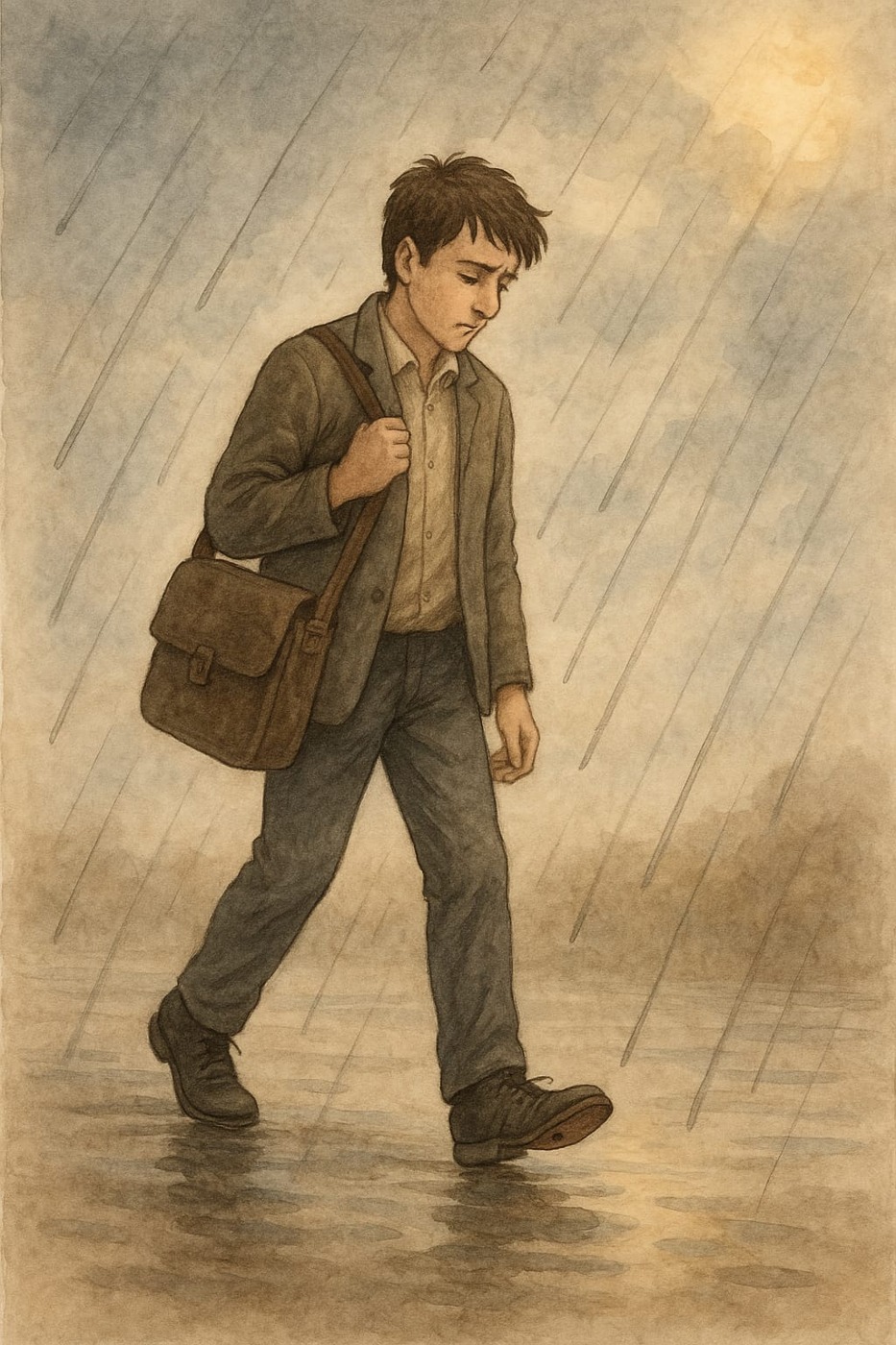
He was sixteen when life decided to change its rules.
One day he had a father who knew how to fix everything. The next day he had a silence that no one could fill. The house stayed the same, the walls still carried the echoes of better times, but something invisible had shifted, the way a room feels different when one chair is missing from the table. The balance was gone, and everyone pretended not to notice.
His mother did her best to keep things as they were. The savings dissolved slowly, the way sugar dissolves in tea, unnoticed at first, until one day the sweetness was simply gone. They tried to live as his father would have wanted: proud, decent, never showing need to the world outside.
When he started university, everything around him looked brighter and louder than he felt ready for. His classmates wore confidence like expensive clothes, easy and unthinking. He, meanwhile, learned how to stretch every coin into something that looked like enough. He took small jobs, mornings, afternoons, sometimes nights, selling, delivering, tutoring. Between lectures, he built a second education, quieter than the official one, about survival and dignity and what a person is made of when comfort is removed.
He had one pair of shoes. He polished them every morning, carefully, as though they were the last thing standing between him and the world's judgment. But time and weather are stronger than polish. One afternoon, walking under a sudden rain, he felt the cold touch his foot. A small hole had opened in the sole, tiny and almost invisible, yet it carried a weight far larger than its size could explain.
It was not shame he felt. It was something forming quietly in the deeper part of him, a whisper that said: never again.
He stood in the rain and looked down at that hole, and thought of his father, of all that had been lost without warning, and of all that could still, slowly, be built. The hole in the shoe did not hurt him. What hurt was the reminder of how fragile pride becomes when life decides to test it without mercy.
From that day, he worked differently. Every task carried meaning. Every small opportunity was treated as a step toward a future that would not leak when it rained. He patched his shoes, not only with glue and thread, but with something stronger.
Years later, when he walked into rooms where the floors were marble and the air smelled of ease, he still carried that boy with him. The boy with the worn sole and the straight back, who had learned that broken things, if you let them, will teach you the truest meaning of standing tall.
And sometimes, catching the scent of wet leather on a rainy day, he smiled to himself.
Because he knew that hole had never really been a wound.
It was a door.
And through it, he had learned to walk into life with purpose.