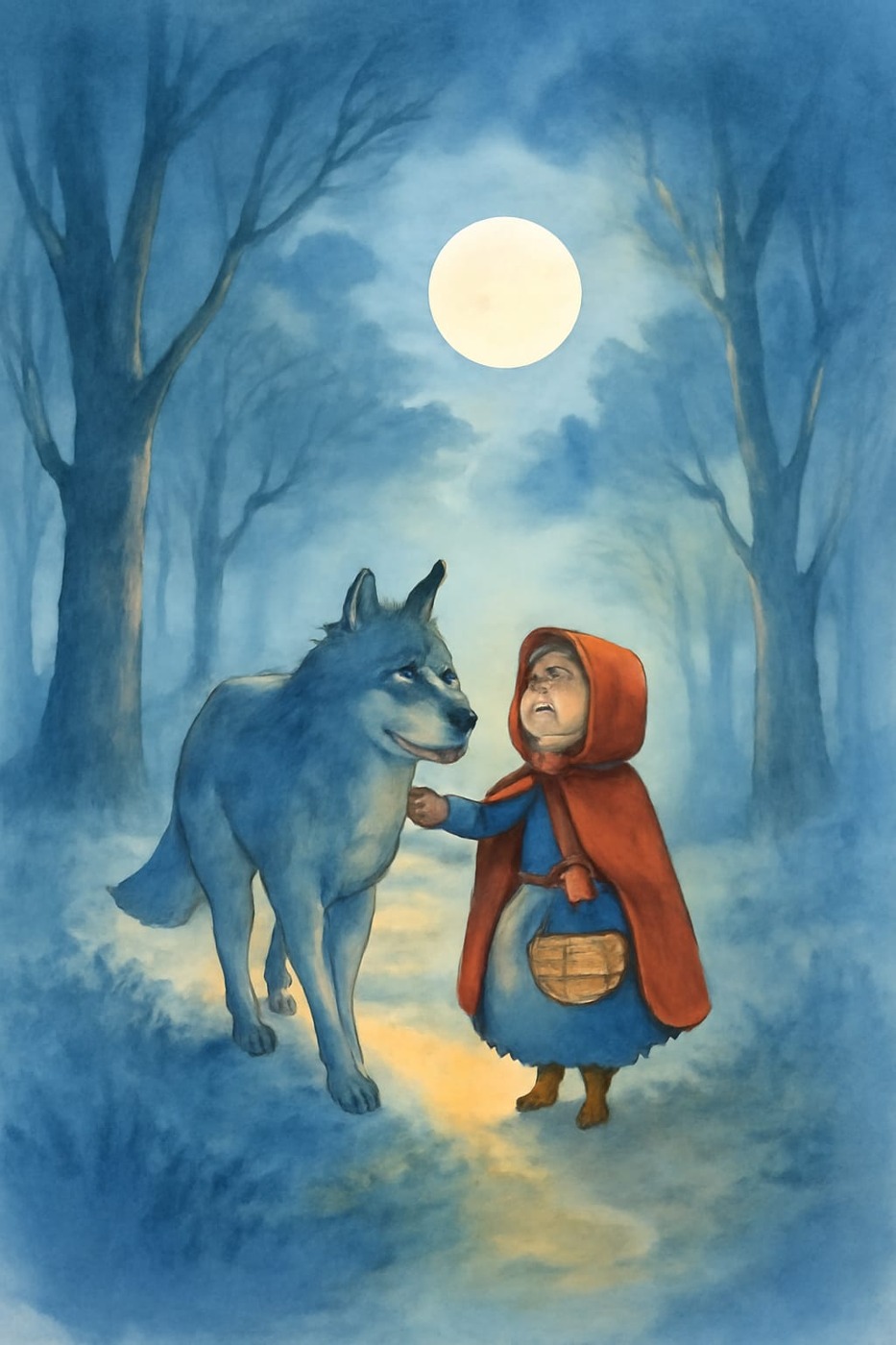
They always said the wolf was dangerous. But no one ever asked the wolf.
He lived alone at the edge of the forest, a creature of quiet habits. Mornings by the stream, long walks beneath the pine trees, evenings spent listening to the wind move through the branches above him. He hunted only what he needed, hurt no one, and preferred the company of silence to anything the world beyond the trees had ever offered.
Until one spring morning, she appeared.
A little girl in a red cloak, skipping through the forest as though the trees were her friends and the dangers only rumours. She sang louder than the birds and carried a basket that smelled of bread and honey.
At first, he stayed hidden. But curiosity has its own pull, even for wolves.
She spotted the glint of his eyes between the trees and waved cheerfully.
"Hello, big dog!"
"I am not a dog," he replied, stepping back.
"Of course you are," she said, smiling. "You just need someone to remind you."
He growled softly, not in anger but in disbelief. She giggled.
He ran deeper into the woods. She followed. He climbed a rock to put distance between them. She waited below, humming to herself. He tried to frighten her with a roar. She only clapped.
Finally, he stopped. "What do you want from me?"
"Nothing," she said simply. "Just company. Granny's house is far, and you walk faster than I do."
He sighed, defeated not by force but by innocence. Against every instinct he possessed, he fell into step beside her.
The journey took hours. She talked the entire way, about flowers that could heal, about stars that granted wishes, about how people misunderstood wolves because they only ever listened to stories told by those who had never met one. For the first time in years, he found himself listening too.
When they reached the cottage, the sun was melting into gold behind the trees. The old woman squinted through the fading light.
"What a fine dog!" she said with delight. "I have always wanted one."
The wolf froze, waiting for the scream that did not come. She shuffled forward, patted his head warmly, and handed him a bone.
He stayed.
Days turned into weeks, weeks into months. He fetched water from the well, guarded the door at night, and even tolerated the ribbons the girl insisted on tying around his neck with great ceremony. He became, in every outward way, the good dog everyone had always wanted him to be.
But inside, his wild heart still beat to a different rhythm. Some nights, when the moon climbed high and the forest breathed its dark, sweet breath toward the window, he would stand very still and feel the pull of it. The scent of pine. The whisper of open space. He did not answer. Not yet.
Years passed. The girl grew older. The grandmother's eyes grew dimmer. And one dawn, before either of them awoke, the wolf walked quietly out into the pale morning light. He left not out of anger or ingratitude, but out of something older and truer than either. He left because he had finally remembered who he was.
The forest welcomed him back without ceremony, the way home always does. He was older now, slower, and wiser in ways that only time and patience can teach. He was no longer the creature who had once run from a stubborn child in a red cloak. He had learned that sometimes life asks us to play roles we never chose, and that it takes patience rather than rebellion to find the right moment to step away.
And as he disappeared into the morning mist, a thought moved quietly through him:
Even the tamest wolf carries a wild dream inside. And dreams, if kept alive long enough, always find their way home.