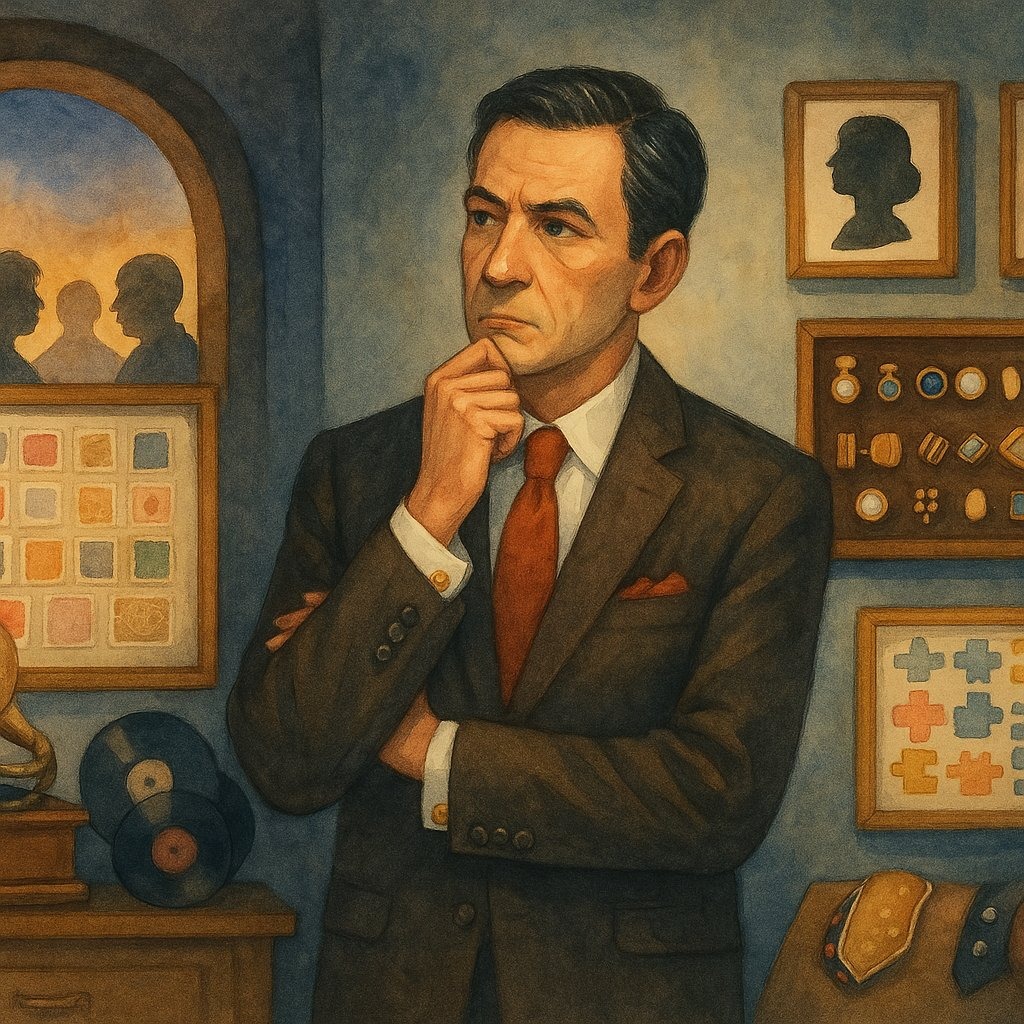
Everyone in the neighbourhood called him the gambler.
They said it casually, as though it were his real name. He never corrected them.
He walked every morning in a clean suit, shoes polished enough to catch the streetlights. His hair was always trimmed, his face clean-shaven, his cologne lingering in the stairwell long after he had passed. To the gossipers, this was confirmation. Gamblers always look sharp before they lose it all.
They said he spent his nights in smoky rooms tossing cards and coins. They said he slept all day because gamblers live when others sleep. No one ever asked him what he did. No one wanted to know.
He worked as a receptionist at the casino. A polite smile, a steady voice, and the patience to greet people at their best and their worst. He took their coats when they arrived, full of confidence and plans, and handed them back when they left, some silent, some with tears they were trying to hide. He preferred the tips people occasionally pressed into his hand on good nights. He learned to handle the insults too.
Over the years, his quiet work had built him a modest comfort. His flat was neat and full of small collections that told a different story about him than the one people preferred.
He collected stamps from every country that passed through those doors, postcards sent by customers from places he would never visit, small thank yous for his kindness. He collected old jazz and swing records, the kind that still carried cigarette smoke and broken hearts in the grooves. But his favourite was his cufflink collection. Most were gifts from players on good nights; a small token slipped into his hand on the way out. Silver, gold, mother of pearl, a few shaped like dice. He never asked for them. He polished each pair, gave them names, and lined them up in a wooden box as though they were medals. Every pair had a story. Some he could tell. Others he could only imagine.
He had not minded the name until he wanted to marry. That was when it stopped feeling harmless.
The families he approached were polite but distant. Some said they would think about it, which always meant no. He understood. Rumours move faster than truth, and no one wants to give their daughter to a gambler, even one who never played.
Some nights he sat by the window, a record turning softly, the faint scent of cologne still on his sleeves, thinking about how easily a label could be pressed onto a life by someone who had never once looked closely at it.
He closed the lid of the wooden box gently, the way you close something you are proud of.
It had cost him more than he liked to admit. The right doors had stayed shut. The right people had walked past.
He did not blame them entirely. We all form impressions before we know better, and most of us never get around to knowing better. That is simply how the world moves.
But he had learned something from it, something worth passing on.
You cannot always control what people think of you. But you can control what you give them to think about. Not by changing who you are, but by being more deliberate about what you show, because the world will always fill the gaps you leave with its own assumptions.
He went to bed.
Tomorrow he would walk past them all again. The same suit, the same shoes, the same unhurried pace. Not to correct anyone. Just to remain, quietly and without apology, exactly himself.