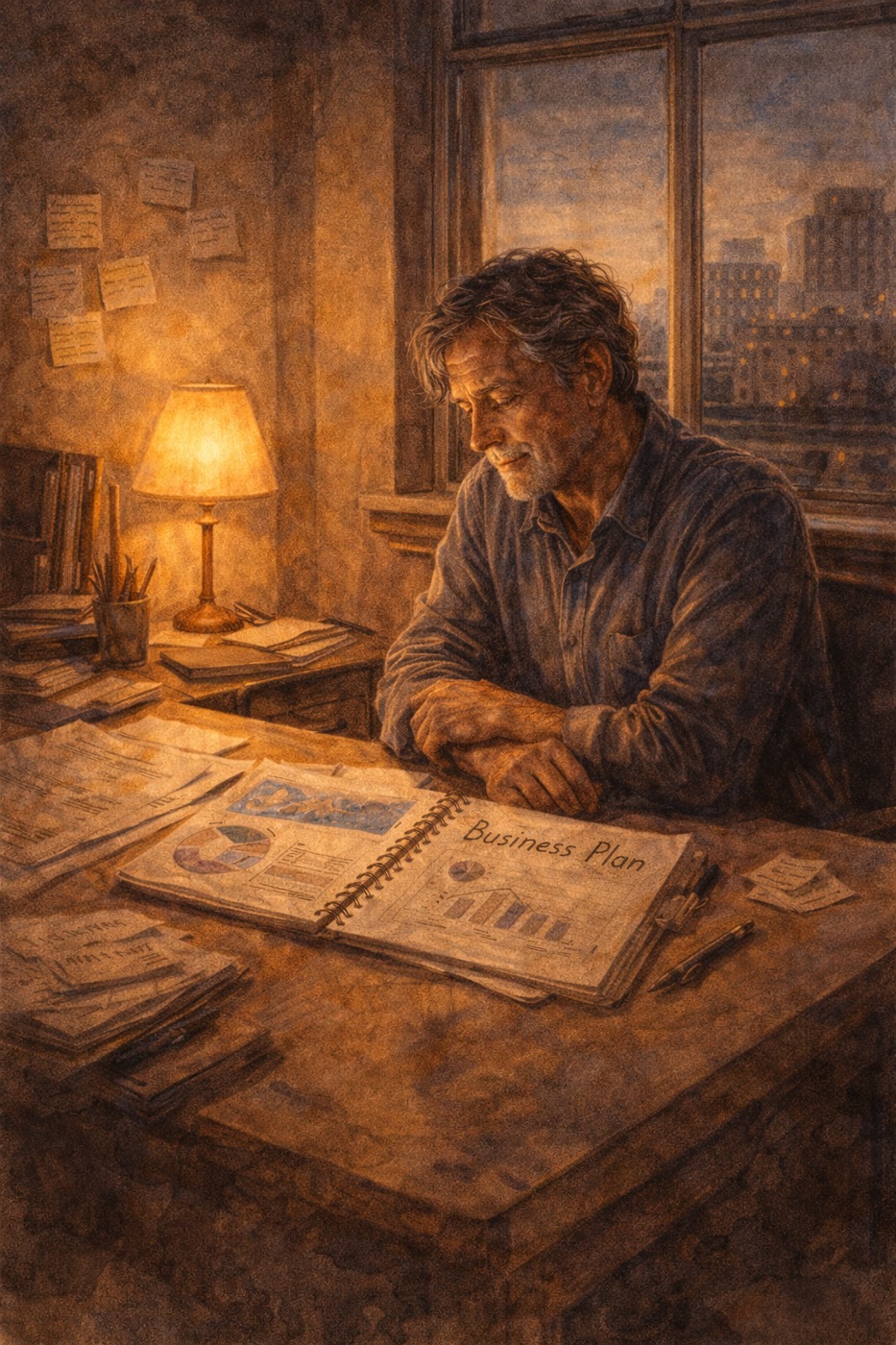
He had a good job; the kind people spend years chasing. A title, a salary, an office with a view. He woke early, dressed neatly, and did what was expected of him. For a long time, he told himself that was enough.
But a thought began to visit him, quietly, the way a whisper visits before it becomes a voice. Is this it?
He started noticing things he had not noticed before. The same desk. The same reports. The same tired eyes behind the same polite smiles. Every week looked like the one before it, only with different dates. He was not building anything. He was maintaining someone else's dream, carefully and competently, while his own waited somewhere he had stopped looking.
He was good at his work. Genuinely good. His ideas were implemented, his judgment trusted, his name mentioned when difficult problems needed solving. And that, he told himself, was exactly the point. If he could do this well for someone else, imagine what he could do for himself.
So he planned.
He spent eighteen months preparing. He studied the market, identified the gap, mapped the competition, built the financial model, wrote the business plan. He consulted people he respected. He saved what he could. He was not jumping into nothing. He was jumping into something he had built carefully, tested thoroughly, and believed in completely.
When he resigned, he felt no fear. Only clarity.
The first months were not what he expected.
Not because the idea was wrong. The idea was sound. Not because the plan was flawed. The plan was thorough. What he had not planned for was everything the plan could not contain.
He had planned for a product. He had not planned for the people needed to deliver it consistently. Hiring turned out to be nothing like managing. The first two people he brought in were competent individually and destructive together. The third left after six weeks for a better offer.
He had planned for demand. He had not planned for timing. The market he had identified was real, but it was six months away from being ready, and six months in a new business with fixed costs is a long time to wait for the world to catch up with your vision.
He had planned for growth. He had not planned for the loneliness of being the person who must decide everything, absorb every setback, and still appear confident to the people depending on him. In his old job, when something went wrong, there were systems and colleagues and a structure that held. Now there was only him.
He did not fail dramatically. There was no single moment of collapse. The business simply ran out of road before it found its footing, and he had to close it with what remained of his savings and considerably less of his certainty.
He sat with that for a while.
Then he went back to employment, not in defeat but in understanding. He knew things now that no plan had taught him and no success could have. He knew the difference between being excellent at a function and being capable of building the conditions in which a function can thrive. He knew that timing is not something you plan for. It is something you survive or you do not. He knew that a business needs more than a good idea and a prepared mind. It needs the right people at the right moment around the right product, and those three things rarely arrive together, no matter how well you have prepared.
He still believed in the dream. He simply believed in it more honestly now.
And he was already planning again, differently this time, with the kind of knowledge that only comes from having learned what a plan cannot tell you.