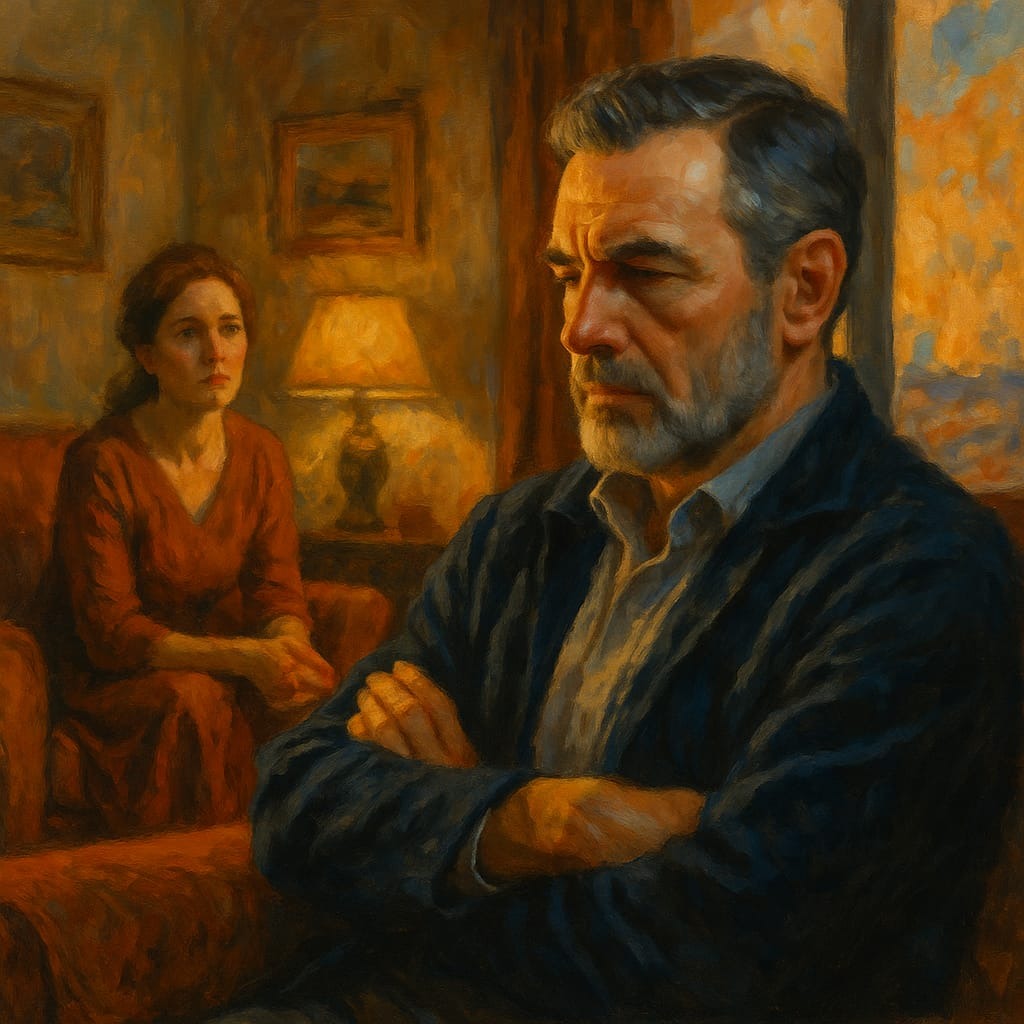
He used to believe that silence meant weakness.
If something was wrong, it had to be said. Corrected, discussed, resolved. At work he never tolerated excuses. At home he never left things unsaid. It was not anger that drove him. It was fairness. He believed that being right was a responsibility, and that someone had to hold the line even when it was uncomfortable.
His wife was different.
She lived by mood rather than rule. She could change plans without notice, forget promises without guilt, bend the truth slightly if the situation seemed to call for it. She did not see this as carelessness. Just flexibility. She would tell him he took life too seriously, and he would tell her that someone had to.
Their love was real, but their peace was fragile. Conversations turned into trials. Small mistakes became debates. He never raised his voice or reached for cruelty. He simply pointed out what she had done wrong, as though reason were a tool that could repair emotion.
Then one evening, something shifted.
He came home to find his armchair gone. The one piece of furniture he had chosen himself, the only thing in the flat that felt entirely his. When he asked, she said lightly that she had donated it. It was taking up too much space.
The words rose in his throat immediately. You had no right.
They never left his lips.
He looked at the empty corner for a moment, then nodded once and said, alright.
That was the beginning.
Over the weeks that followed, he stopped arguing. When she said something unfair, he let it pass. When she changed her mind, he adjusted. When colleagues complained, he listened and moved on without carrying the weight of it home. She noticed the change and did not know what to make of it.
"You don't care anymore," she said one night. "You used to fight for things."
He smiled. "Maybe I finally learned that not everything needs a fight."
She mistook his calm for distance, his quiet for indifference. But it was neither. He had simply stopped measuring people by their mistakes, including her and including himself.
Life began to soften around him. He noticed small laughter he had been too serious to hear before. He stopped carrying everyone else's wrongdoings on his shoulders. He slept better. Ate slower. Smiled more easily, and with less reason required.
He had spent years believing that blame was a form of love, that pointing out what was wrong was the same as caring about what was right. But blame had never fixed anyone. It had only kept him chained to what hurt.
One night, she finally asked whether he had stopped caring about them.
He looked at her steadily.
"I never stopped," he said. "I just stopped needing my opinion to be louder than my love."