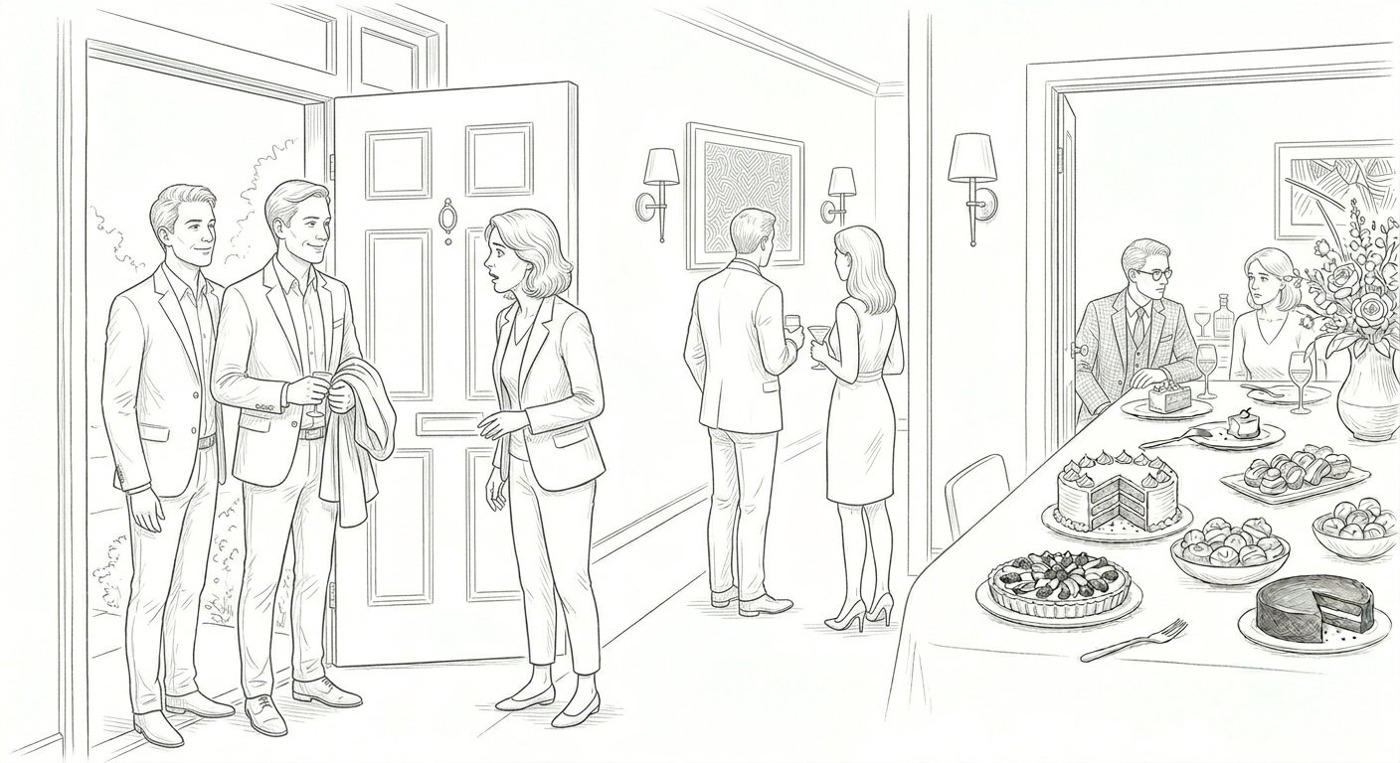
They are not hard to spot.
They walk in and do not immediately make the room about them. They take a moment, quiet and composed, to understand the evening before they become part of it. Who is here. What is the mood. Where does the host need help and where does the host need to be left alone. All of this they read in the first few minutes, before they have taken off their coat.
The ones who read the room do not interrupt a conversation to insert themselves. They find their way in naturally, at a pause, without forcing the rhythm of what was already happening. They do not steer every conversation back to themselves. They ask questions and they listen to the answers, which sounds basic and yet is rarer than it should be.
They notice the host. This is perhaps the most important thing. At a gathering, the host is often the person least able to enjoy it. They are managing, refilling, resolving, moving between groups, making sure the whole thing holds together. The guest who reads the room notices this and does not add to the weight. They might remove some of it. A quiet offer to carry something, an eye kept on an empty dish, a word with the guest who has been standing alone for too long. Nothing performed. Just attention, applied.
They also know when to be loud and when to be quiet. When the moment calls for enthusiasm, they bring it. When the moment calls for stillness, they provide that instead. They are not running a fixed programme. They are responding to the actual evening in front of them, which changes from moment to moment and requires flexibility from everyone in the room.
The guest who reads the room does not always say the funniest thing. They are not always the most knowledgeable or the most entertaining. But they leave the host with a feeling that is difficult to name and impossible to manufacture. The feeling that the evening was better because they were in it.
Not every guest arrives with empty hands. Some arrive with full ones, and the question of what they have brought, and why, is more complicated than it first appears.