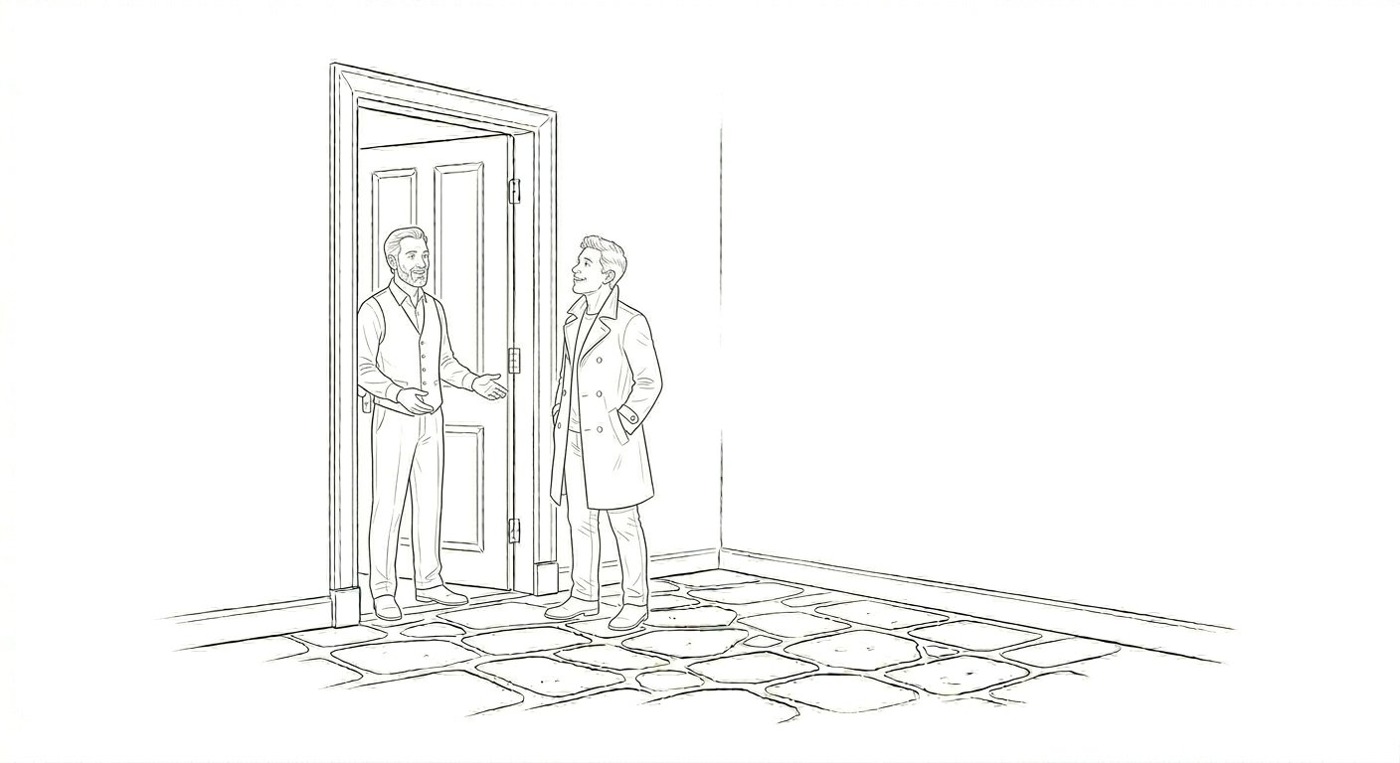
They arrive empty-handed.
This is not always a moral failing. There are circumstances. There is forgetfulness. There is the genuine misread of the invitation that said please do not bring anything and was taken at face value when it was intended as the kind of politeness that means please do not bring anything large or expensive but something small would still be welcome. The codes are not always clear and not everyone was raised to read them.
But there is a version of the empty-handed guest who has not misread anything. They received the invitation, they knew the convention, and they made a choice. The choice was that their presence was sufficient and that the provision of food and drink and space and effort and welcome was the host's contribution to an exchange that they were now balancing with the simple fact of showing up.
The host never says anything. This is part of the convention too. The empty hands are noted and absorbed, and the evening continues and nothing is made of it. But something has happened. A small imbalance has been introduced into the room, one that the host is now carrying along with everything else.
What the guest brings does not have to be expensive. It does not have to be useful. A bottle of something, a box of something, a bunch of flowers that will need a vase and create a small moment of work for the host, all of these are fine. What they are, more than the object itself, is an acknowledgement. I thought about this. I thought about you. I arrived with evidence that the invitation was considered and not simply accepted.
Some guests have refined this to an art. They bring the thing that is not obvious but is exactly right. The specific thing that was mentioned in passing three weeks ago. The host looks at it and feels, for a moment, entirely seen. This is a skill and it is not a small one. It requires the guest to have been paying attention long before the evening began.
The hands that carry nothing are not the worst problem a host faces. They are not the guest who takes too much or stays too long or reorganises the furniture or makes everyone in the room slightly uncomfortable. They are simply the guest who arrived without the small physical evidence of having prepared to arrive.
The host notices. The host always notices.
Some guests arrive having thought about what to bring. Others arrive having thought about something else entirely: how to make themselves completely at home the moment they get there.