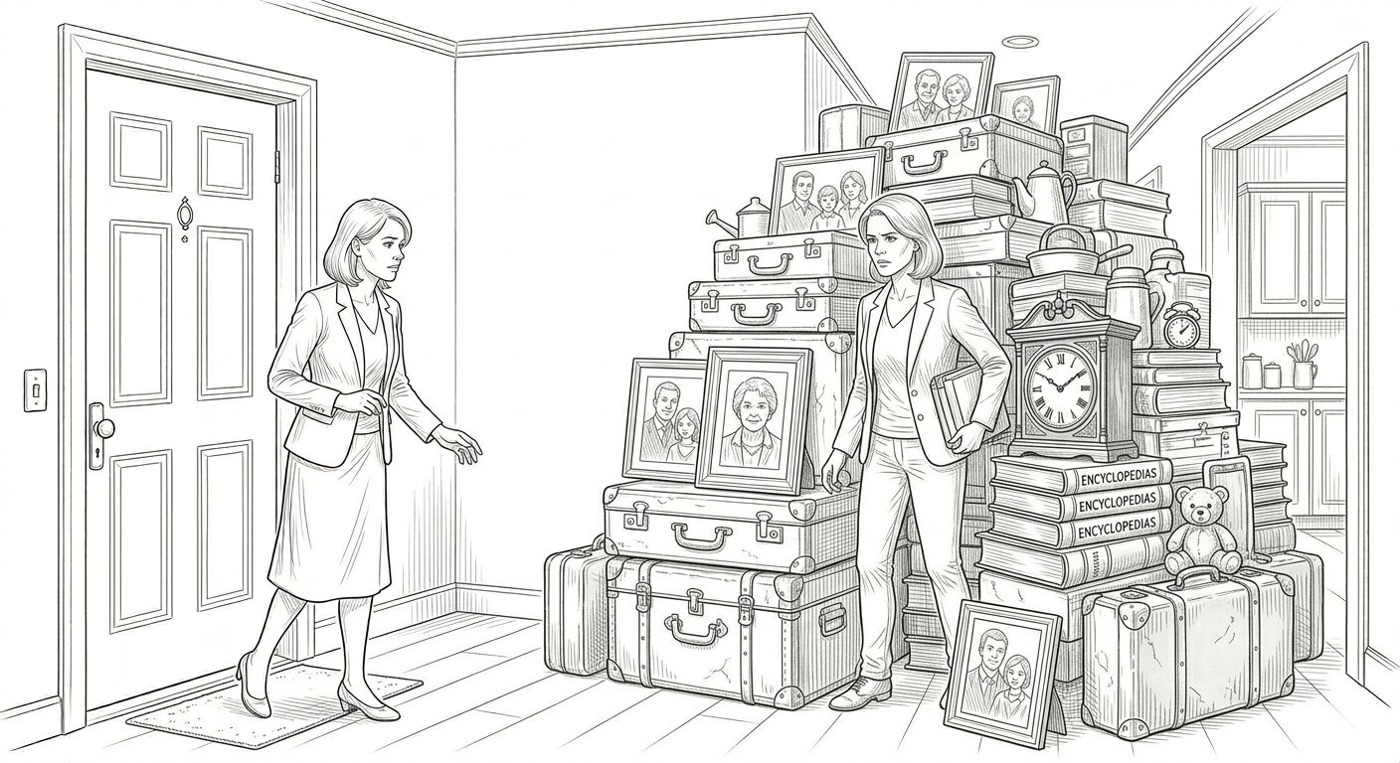
Most guests pack for the visit.
They bring what they need for the evening, the weekend, the season. They know the shape of the stay before it begins and they have planned accordingly. At some point, they will unpack in reverse. They have always known this.
Then there is the guest who packs differently.
Not more. Not less. Just differently. The selection of what goes into the bag tells a story, if you know how to read it. The things chosen are not the things you choose for a visit. They are the things you choose when you are not coming back. There is a completeness to it, a quiet finality in what was left behind, that the host will only understand later, when the guest has been in the house long enough that the question of leaving has become complicated.
The one-way guest does not always know they are one. Some of them arrive with genuine uncertainty, a real intention to assess, to try, to see. The decision crystallises after arrival, when the place turns out to be more accommodating than imagined, more difficult to leave than it seemed from a distance. The intention to stay was not formed before departure. It formed in the guest room, in the first week, when the host was kind and the situation was comfortable and going back suddenly required an effort that staying did not.
Others knew before they packed. The bag they brought was always a one-way bag. The return was never part of the plan, even when a return was discussed, even when dates were mentioned and agreements were made. The silence when asked directly about the future is the answer. They are not uncertain about the future. They have simply decided not to discuss it.
The host, who opened the door to a visit, finds themselves hosting something that has changed shape without being announced. The guest room is occupied in a way that has started to feel permanent. The rhythms of the house have adjusted around a presence that was never intended to be structural.
The host's own patterns have bent slightly to accommodate someone who arrived as temporary and has quietly become something else.
The one-way guest is not always a burden. Sometimes they become part of the household in a way that works well for everyone. Sometimes the host is glad they stayed. But the gladness, where it exists, is a separate thing from the decision.
The decision was made without consultation. The host was not asked whether a temporary arrangement should become a lasting one. The arrangement simply became lasting, the way things become lasting when no one explicitly ends them, through the accumulation of days that were each individually too minor to address until suddenly there were enough of them that addressing them required a different kind of conversation entirely.
The first one arrives without announcement, introduced briefly in the hallway as a friend passing through. They are gone in two days. The host barely notices. Then another one, similarly brief. Then a third, who stays a week. The host has not set a policy because a policy seemed unnecessary. By the time a policy would be useful, setting one requires overturning an established pattern, and overturning an established pattern is a much heavier thing than simply not establishing it in the first place.
The one-way guest chose to arrive. They decided, packed a bag, and walked through a door that someone else opened. The generation that comes after them never had to make that choice. The door was already open. They were simply born on the right side of it.