You know them before they knock.
They called ahead. Not to confirm the time, not to ask for directions, not to check whether the thing they are bringing is still needed. They called because they were thinking about you and the evening, and they wanted to know if there was anything they could do before they arrived. There usually is. They already suspected this. That is why they called.
They offered to pick someone up on the way. Or to pick something up. A bag of ice. The thing you forgot. The ingredient that had been on the list for days and never quite made it into the car. They did not wait to be asked. They thought ahead to where the gaps might be and they filled one before they arrived.
They arrive at the right time. Not the time on the invitation. The right time. There is a difference and they have always understood it. Too early and you are a problem. Too late and you are an inconvenience. They arrive when the host is ready but not yet lonely, when the room is set but not yet waiting, when the door opens and the host thinks: good, you are here.
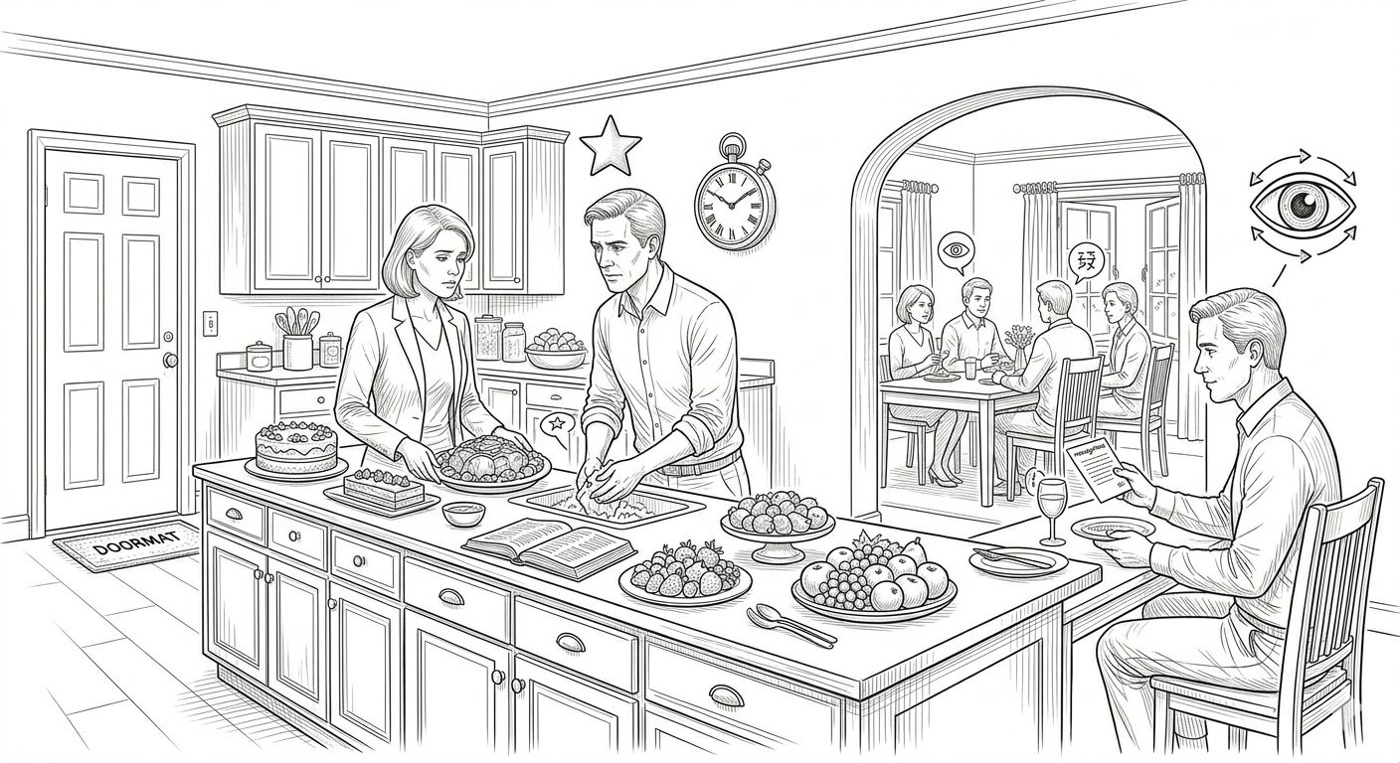
They read the kitchen the moment they walk in. Not the food, not what is being served, but the state of it. Whether the host is ahead or behind, calm or quietly managing. If the host is behind, they are already washing their hands. If the host is ahead, they are already out of the way.
They offer once. Not twice, not three times with increasing insistence until the host feels guilty for saying no. Once, clearly, and then they accept the answer. The offer was genuine. It was not a performance of helpfulness designed to be noticed. It landed and it was received and that is the end of it.
They brought something. Not the thing they always bring, not the safe choice made without thought. The thing that made sense for tonight specifically. They paid attention the last time and they remembered and they acted on it. The host notices. The host does not say anything, because there is no need to. The noticing is enough.
At the table they are present. They contribute without dominating. They listen with the kind of attention that makes the person speaking feel that what they are saying is worth saying. They do not check their phone. They do not arrive with a story so important that everything else must wait for it. They are there, fully, for the duration.
If a dish needs to go to the table, they carry it. If a glass is empty, they notice. If the host is caught in one conversation and something needs managing in another corner of the room, they manage it. Not because they were asked. Because they were paying attention and paying attention told them what to do.
If there is a moment when the host needs a deputy, they have already sensed it. They will do what is needed without being asked and without making it visible. The other guests will not notice. The host will and will be quietly grateful for the rest of the evening.
They are the first to leave.
This is the final gift, and it is not a small one. They read the room, they see the hour, they see the host, and they make their decision. They say their goodbye warmly and without drama and they go. And something shifts in the room the moment they do, because a good guest leaving is permission. The chain starts. The others begin to find their coats. The host, who has been hosting for hours, sees the end of the evening approaching and feels the relief of someone who has done something well and is nearly done.
The washing up, they offered. The host said no. They did not insist. But the next morning the host finds the counter cleaner than it was, the stack of plates a little neater, a small thing done quietly on the way out that nobody saw and nobody needed to.
After they have gone, the host finds a note. Or a message. Or simply, the next morning, a memory of the evening that has their name in every good part of it.
They are not rare because they are complicated. They are rare because they are paying attention when most people have decided that they do not need to. The perfect guest is not a perfect person. They are simply someone who understands that being invited is a privilege, that a host's time and effort and home are not an entitlement, and that the best thing you can do when someone opens their door for you is to make them glad, they did.
A guest who never forgot they were one.