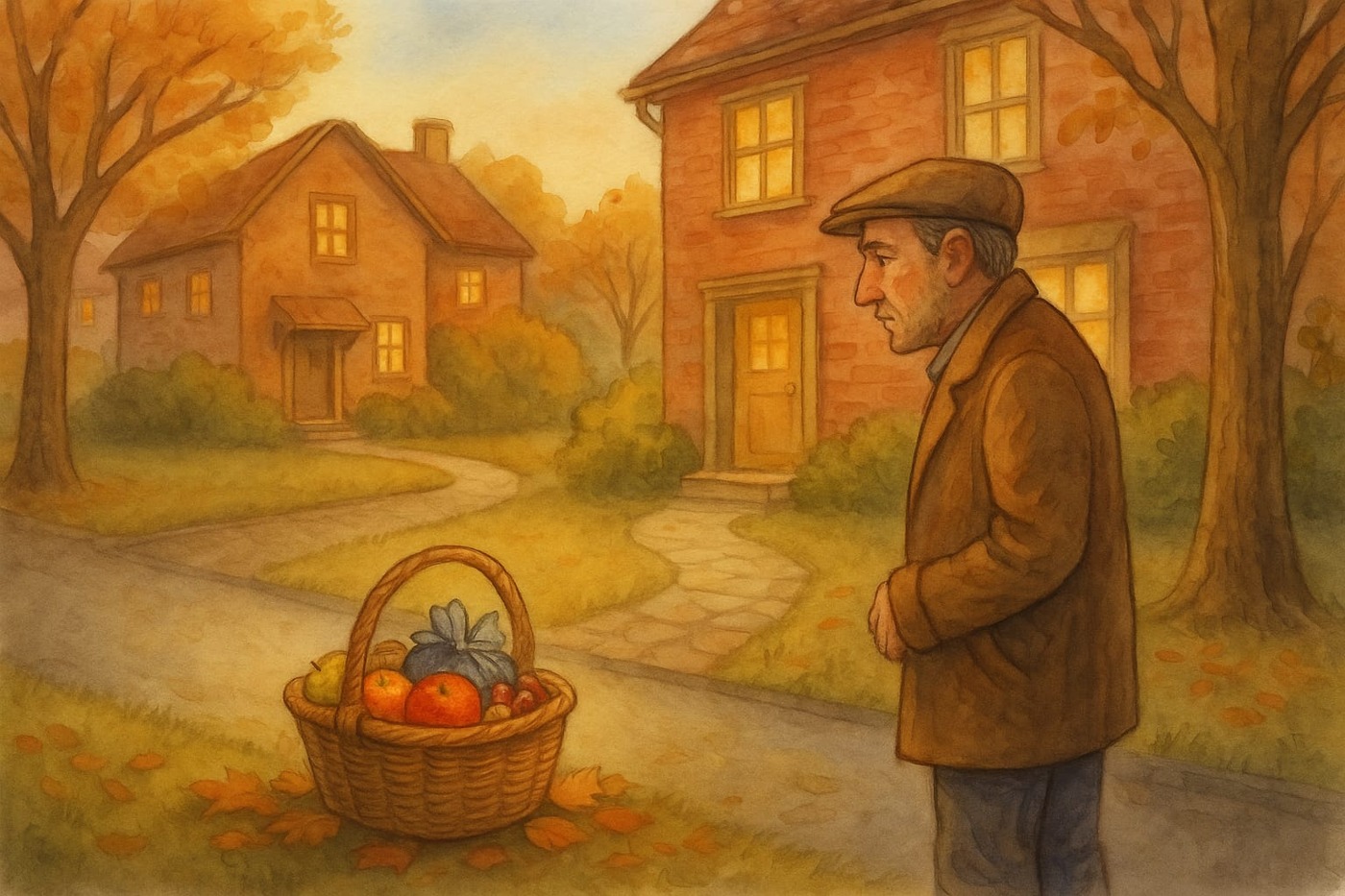
He filled the basket the same way each morning.
Not rushed, not careless: every piece chosen as if it mattered. The bright apples polished until they caught the light, the sweets wrapped in paper that crinkled softly, the small loaf of bread still warm from the bakery. He packed them with the kind of care that had nowhere else to go, as though he were joining them for breakfast, though he knew he would not cross the door.
Once, the routine had been different.
He used to arrive with the day's groceries and be met by small feet running, eager hands pulling at his bag, voices competing for his attention all at once. They would grab his coat, laugh, and pull him inside where the house was alive with warmth and noise and the beautiful chaos of children who did not yet know how to be still. That was another life. Yet it returned to him so easily, so completely, that he could almost feel the small hands on his sleeve.
Now the same house stood two blocks away. Familiar, but closed to him.
He did not need to ask why. The answers had already been given, and they had hurt enough the first time. He carried no explanations with him anymore. Only the basket.
When he reached the street, he slowed his steps. His eyes moved to the windows, searching for a shadow, a curtain shifting, any small sign of the life continuing inside. Then, as always, he placed the basket quietly at the door. He never knocked. He never rang the bell. He only set it down, adjusted it gently so it looked welcoming, and stepped back.
Across the road, half hidden behind the wall, he waited.
The moment always came. The sound of the latch, the door opening slowly, cautious eyes scanning the empty street. The basket disappeared inside, and with it went something he could not name, a piece of himself he was glad to lose this way.
He stayed a little longer, straining for something more. A laugh, a small cheer, a word of delight. Sometimes he thought he heard it faintly, carried on the air. Sometimes it was only the wind, and he let himself believe it anyway.
They thought the gifts came from a kind neighbour. He never corrected the story. If that version made it easier for them to accept, then so be it. He was not looking for thanks. In his own mind, nothing had changed: they were still his, and this was simply what a father did. What a father had always done, and would go on doing, for as long as his hands could carry a basket and his legs could cover two blocks.
When the street grew still at last, he turned and walked back the way he had come. His steps were heavy but firm, carrying both ache and comfort in equal measure.
The basket was gone. And that was enough
Love does not always wait at the table or sit by the fire. Sometimes it waits behind a wall, two blocks away, quietly leaving pieces of itself at the door.