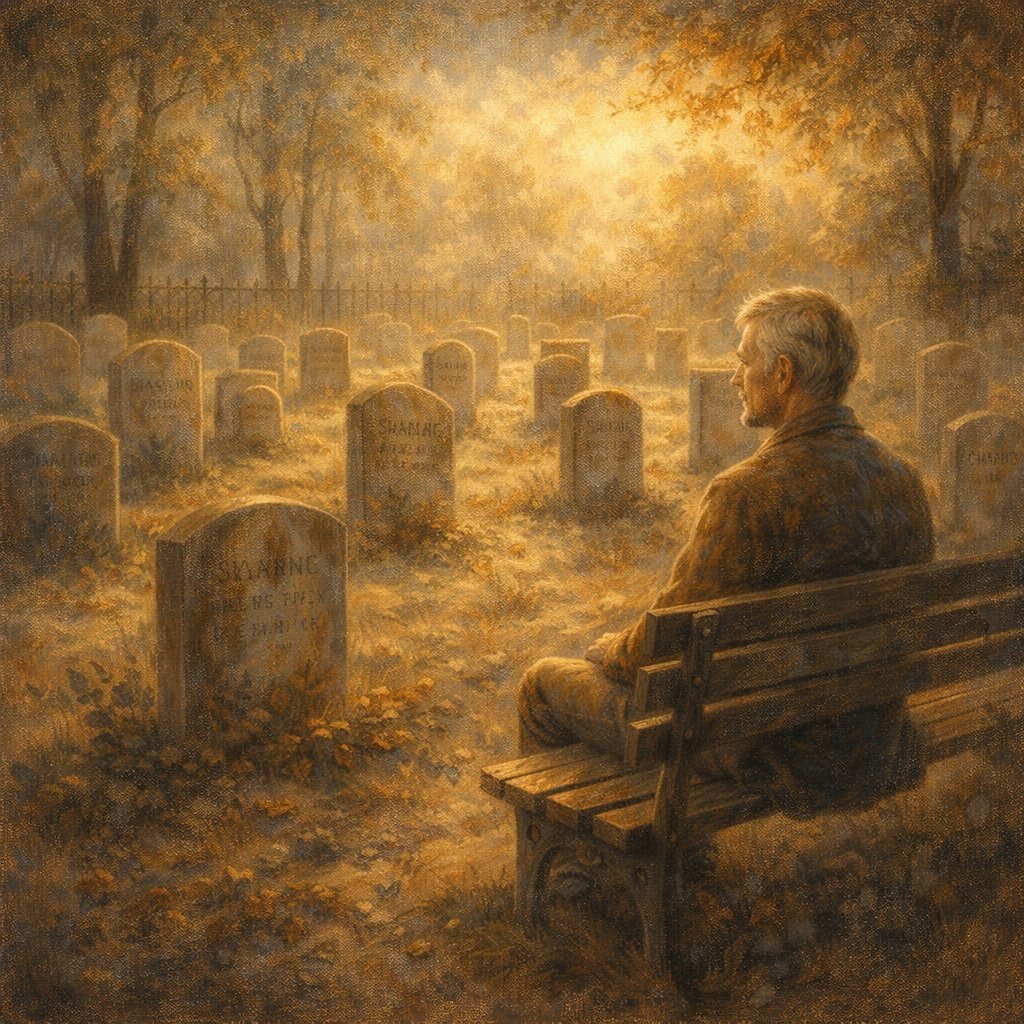
He had passed that gate more times than he could count, always with somewhere else to be. That afternoon, for the first time, he felt he was already there.
He walked through the small iron gate and sat on an old wooden bench facing the rows of tombstones. It was quiet, but not heavy. The wind moved softly between the stones, carrying the smell of earth and time.
From where he sat, the names looked almost alive. Some carved decades ago, others new. Each one belonged to someone who once had plans, meetings, worries, and dreams. Someone who once said, I will do it later.
He smiled gently. There was no sadness in him, only clarity.
He thought of the list he had been carrying in his head for years. The people he had meant to call but never did. The trip he kept postponing. The book he had always wanted to write. The apology he owed but had never found the right moment to make. He had always told himself he would get to it one day, when life was less busy, when the time felt right. But as he looked at the stones in front of him, he understood: this was one day for all of them.
He remembered his grandfather's voice telling him to do things while his hands could still move. He had always taken that as the kind of thing old men say. Now it settled inside him differently.
His eyes moved from one grave to another, and for a quiet moment he tried to imagine the lives behind each name. The dreams they had carried. The things they had loved. The words they had kept for later and never spoken. The whole place seemed to hum with the same soft message: do not wait.
He thought of his own life then. He had succeeded in many things, but he had also postponed more than he cared to count. The opportunity he had turned away out of fear. The idea he had abandoned because someone laughed at it. The letter he had written and never sent. Life had offered him its chances generously. He had simply kept setting them aside.
He sat with that for a while, watching the afternoon light move slowly across the stones.
Then something inside him shifted. Not guilt. Something cleaner than guilt. Resolve.
He stood, brushed the dust from his coat, and whispered, "Thank you."
The graves did not answer. They did not need to. They had already said everything.
As he walked back through the iron gate, he felt lighter than he had in years. He knew what waited for him now. Calls to make, words to say, forgiveness to offer, a trip to book, a first page to write. Not tomorrow. Not when life settled. Now, while his hands could still move and his voice could still carry.
The graveyard was not a sad place.
It was the most honest place he had ever sat in. Because the dead have no reason left to pretend that later will always come, and the living who listen carefully enough will understand that later is quiet, still, and without options.
Life, on the other hand, is noisy, messy, and full of chances. But chances, like the people we love, do not wait forever. The graveyard does not ask how much you earned or how busy you were. It only receives what time has finished with. And time finishes with all of us eventually. The question is simply what we leave behind before it does.