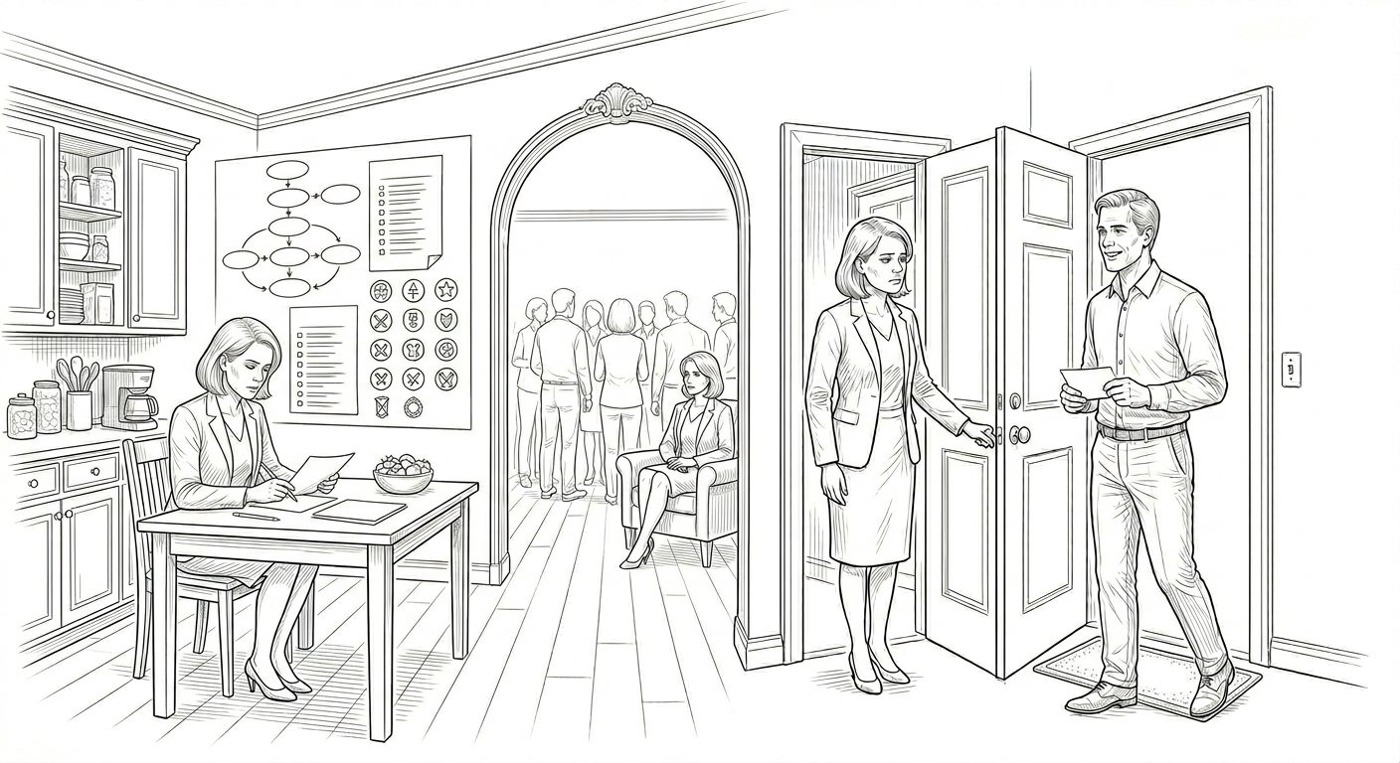
Before any of it begins, there is the invitation.
It does not have to be formal. It does not have to be written down or sent in advance with an RSVP and a map. It can arrive as a text message, a phone call, a hand raised across a crowded room. It can be as simple as a door left open and an expression on a face that says come in. But it is always there, always the first thing, and everything that follows depends on it.
The invitation is a transfer of intention. The host is saying: I want you here. In my space, at my table, among the people I have chosen for this occasion. That wanting is not a small thing. It required the host to think of you; to decide you belong in the room they are creating, to extend themselves past the comfortable boundary of their own life and into yours.
The guest who understands this understands everything.
There is a version of being invited that some people never quite learn. They receive the message and they think: I have been told the time and the address. They arrive and they think: I was invited, so I belong here. They leave and they think: that was a nice evening. At no point do they consider the labour that produced it. The planning, the shopping, the preparation, the management of a dozen different expectations and dietary requirements and social dynamics, the quiet anxiety of the host who wants everyone to have a good time and will spend the next three days wondering if they did.
The invitation asks something of the guest. Not explicitly. Not in the text message or the hand raised across the room. But it is there in the gesture itself, in the fact that someone opened a door for you specifically and not for everyone, and that opening carries with it a quiet expectation that you will walk through it with some awareness of what it cost to open.
Some guests bring that awareness with them and the host feels it immediately. The evening is easier for it. Others do not, and the host notices that too, usually around the third time they have refilled a glass that was not offered back, or cleared a plate that was left without acknowledgement, or answered the same question about where the bathroom is.
The invitation was the beginning. It was not the whole story.
Every host who has issued an invitation has also, at some point, wished they could take one back. The rules that govern what happens between the opening of the door and that feeling are what the next chapter is about.