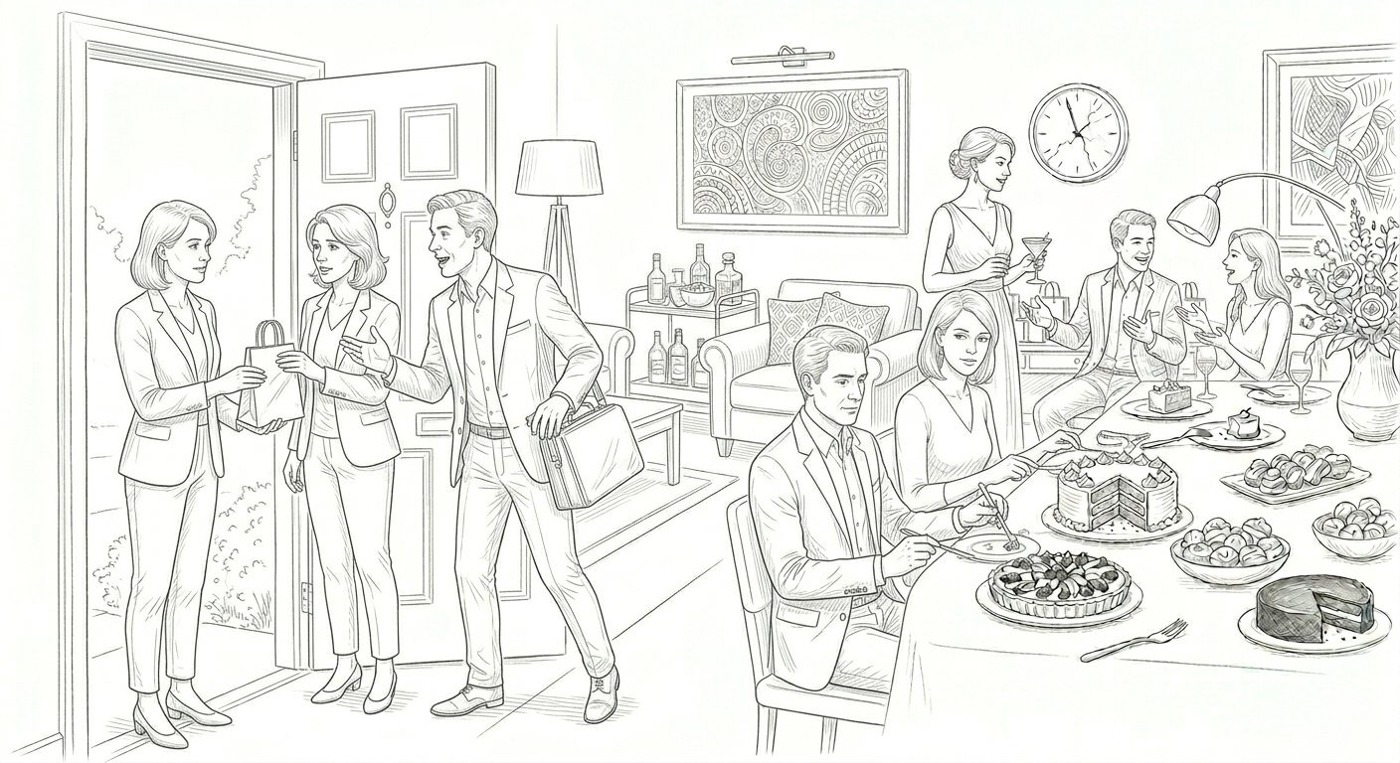
The door opens.
Everything that follows in the next five minutes will set the tone for the rest of the evening. The host knows this. The experienced guest knows this. The inexperienced guest has no idea, which is exactly the problem.
The first five minutes are not a greeting. They are an assessment. Both parties are reading the room, taking in information, adjusting their expectations. The host is deciding how this evening is going to feel. The guest is deciding how they are going to behave in it. Most of this happens without a word being spoken.
The guest who gets this right does several things in those first minutes, none of them showy. They arrive with something in their hands and they hand it over without ceremony. They read the host's face and adjust their energy accordingly. If the host is calm, they are calm. If the host is slightly behind and managing several things at once, they say I'll sort myself out and they mean it. They do not plant themselves in the hallway requiring entertainment while the host is clearly needed elsewhere.
They find somewhere to be that does not create more work. This sounds simple. It is not. A surprising number of guests arrive and immediately become a problem to be managed. They need somewhere to sit before a seat has been offered. They need a drink before the drinks have been set out. They ask questions that require the host to stop doing three other things and answer. They are not being rude. They simply have not noticed that the evening has not started yet, and that their arrival is one of the inputs the host is currently managing.
The guest who gets the first five minutes right has already given the host something. A moment of not having to worry about that person. In a gathering of several guests, each of whom is arriving and requiring their own form of welcome and management, the guest who takes care of themselves in those first minutes is a gift.
There is also the matter of the entrance itself. Some guests arrive as though they are the event. The volume changes when they walk in. The energy shifts. Every head turns. This can be charming once. It is exhausting as a habit. The host who has carefully calibrated the atmosphere of a gathering does not always want it recalibrated the moment you arrive.
The best arrivals are the ones that simply add. Not announce. Not redirect. Add.
Knowing how to arrive is one thing. Knowing what to bring is another. The guest who walks in empty-handed has already said something about themselves before they have said a word.