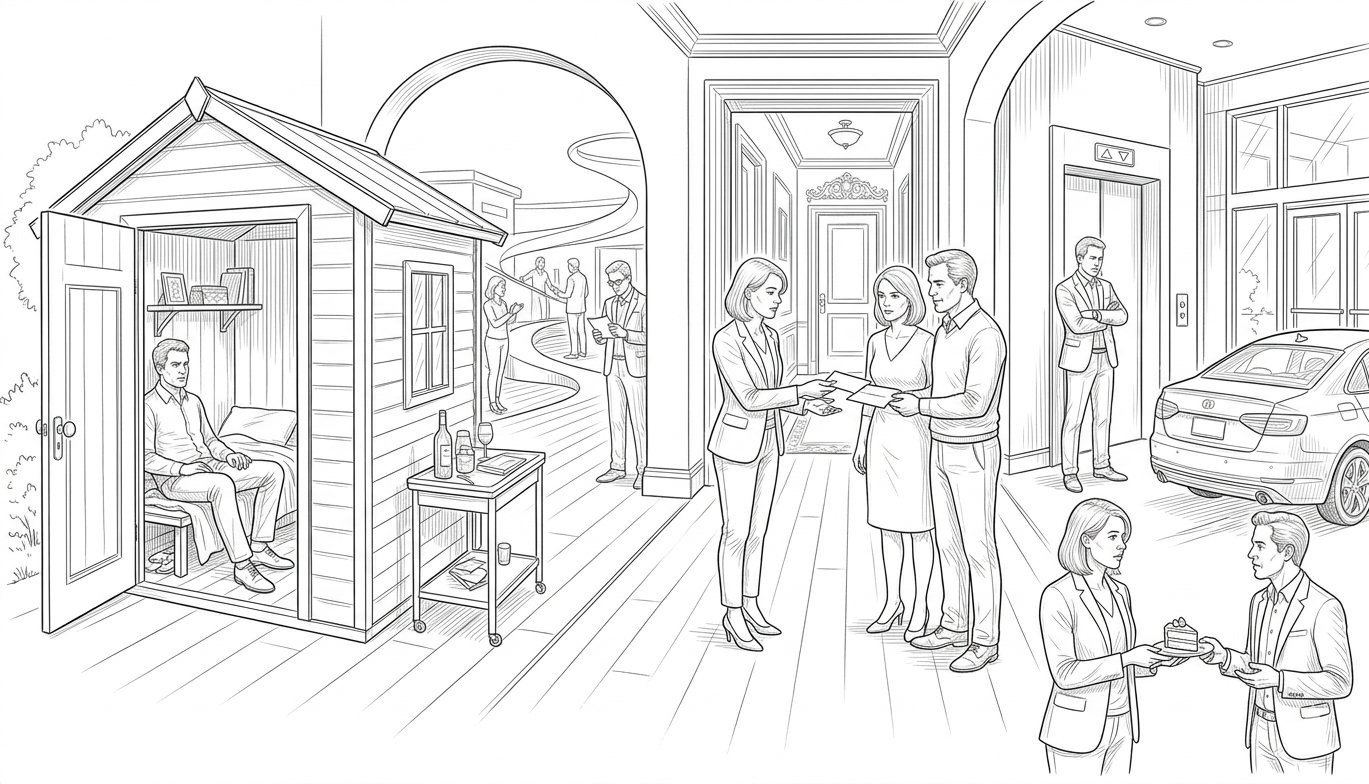
A gesture is not a contract.
This is the thing that gets forgotten. The gift was given freely, which means it was given without conditions, which means the giving of it created no obligation to give it again. And yet something in human nature resists this conclusion. Something in us takes the repeated and makes it permanent, takes the voluntary and makes it expected, takes the gift and slowly, without any conscious decision, converts it into something that was always owed.
If I invite you to my event, you might expect to be invited again. That expectation is understandable. But the second invitation is not a debt. It is a fresh decision, made by the same person who made the first one, based on the same freedom that produced the first one. The host who decides not to invite you the following year has not taken anything away. They have simply made a different decision with something that was always theirs to decide.
The neighbour who receives a slice of cake every month has received a kindness. If they speak badly of the person who brought it, they have done something that has a name. They have spat in the plate they ate from. The cake was not a rental agreement. The goodwill that produced it was not a service with a contract attached. It was a free gift from a person who wanted to be kind, and the minimum that gift required in return was that its existence not be used against its giver.
The guest who was given the shed is a clearer case. The shed was offered for a season, because the host was generous and the need was real and the offer was the kind of instinctive human kindness that asks nothing in return except that it be understood for what it was: temporary. The guest who stops looking for somewhere else because the shed is comfortable has taken more than they were given. The guest who begins to treat the shed as a home, who adds to it, who settles into it, who stops looking because the looking is hard and the shed is comfortable, has taken something that was not offered. The offer was a roof for a season. Not a foundation for a life.
The lift offered on the way to work is a kindness between neighbours. It is not a taxi service with a standing booking. The driver who offers it does so on their terms, on the days that suit them, along the route they are already taking. The passenger who waits at the door on a day no lift was offered, who is annoyed when they must find another way, who holds the inconvenience against the driver as though a promise was broken, has misread every part of the arrangement. The lift was given. It was not sold. There was no timetable. There was no obligation beyond the moment of the offer.
Human nature is a generous thing in many ways, but it has this habit. It takes the repeated and makes it permanent. It takes the voluntary and makes it expected. It takes the gift and, slowly, without ever quite deciding to, converts it into something that was always owed.
Some countries built something remarkable. Systems of generosity so well designed that they began to feel like the natural order of things, not as achievements to be maintained but as landscapes to be inhabited. And then some of those who arrived in that landscape, who were welcomed into it with extraordinary openness, began to treat it the way guests sometimes treat a home that has been too generous for too long. Not as something rare, something built over decades at considerable cost by people who believed in a certain idea of community. But as something that was simply there. As something they were owed. The systems did not break overnight. But they began, in places, to change. Not because the hosts became less generous by nature, but because generosity without reciprocity is not a system. It is a resource. And resources, when treated as infinite, have a way of proving otherwise.
The host who gives and gives and is met with expectation rather than gratitude does not suddenly stop being generous. They become careful. They put conditions on what was previously offered freely. They ask questions before opening the door. They lock what used to be locked. They do not do this because they became different people. They do this because the gift was converted into a right, and they had no choice but to remind everyone involved that it never was.
Every invitation has a start and an end. The ones that do not, are not invitations. They are something else entirely.