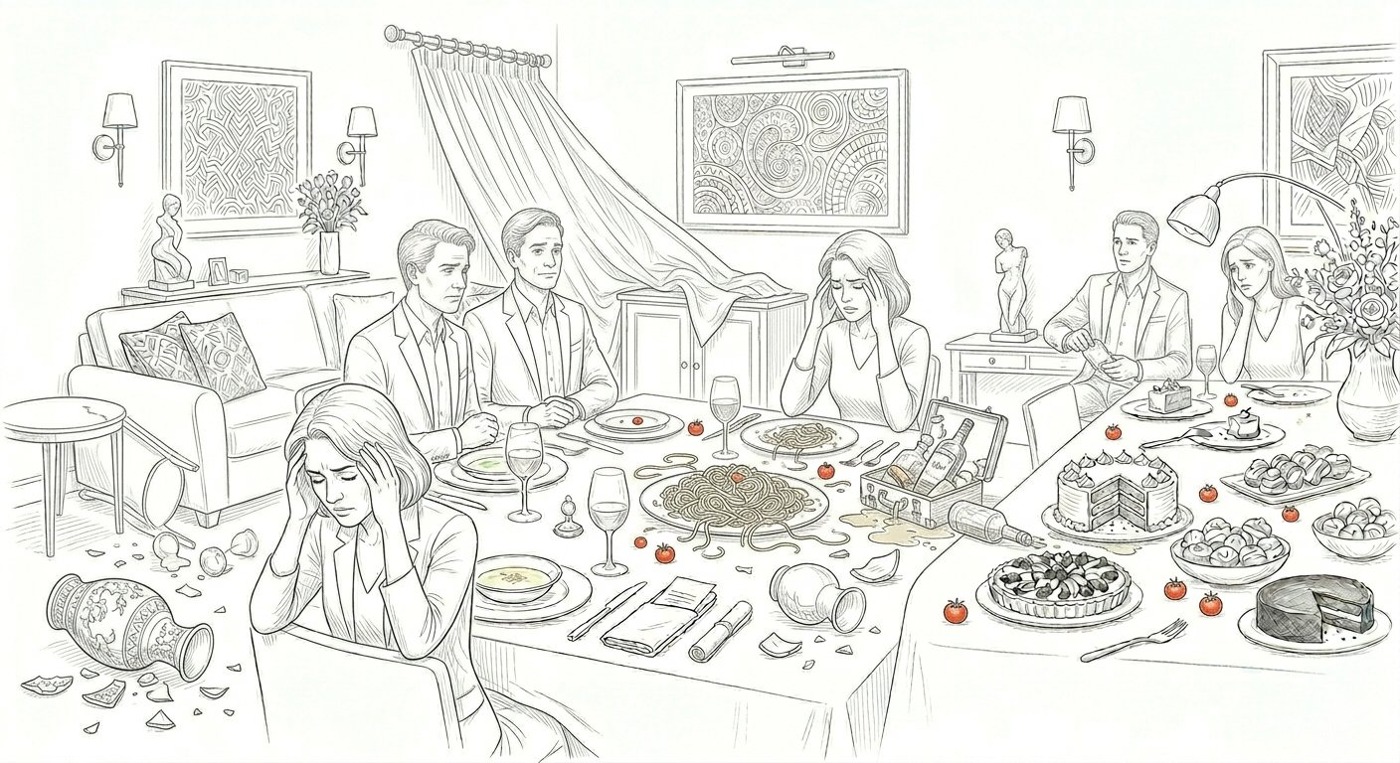
Nobody mentioned a child.
The invitation went to the parents. It was accepted by the parents. The arrangement, as understood by the host, was that two adults would be arriving for an evening that had been planned around two adults. The number of plates set, the amount of food prepared, the shape of the conversation anticipated, all of it was calibrated for a gathering that did not include someone who would need to be fed separately and entertained continuously and managed with the specific patience that children require from every adult in the room.
The child arrives through the door ahead of its parents, already moving, already taking up space, already curious about every object at child height in the host's home. The parents follow with the expression of people who have made a decision and are now presenting it as though it were obviously fine. The host adjusts. This is what hosts do. They smile and they find something for the child to eat, and they recalibrate the entire evening without letting the recalibration show.
The child itself is not the problem. Children are what they are. They move through the world according to their own logic and they are not yet equipped to understand that the room they have entered was designed for people who are not them. They touch things that should not be touched. They require attention at the exact moments when all the available attention is pointed elsewhere. They process unfamiliar environments at volume.
The problem is the assumption. The parent who brings an invited child to a gathering has made a decision on behalf of the host. They have looked at an invitation that was extended to them and expanded it without asking and then arrived in the confidence that the expansion would be absorbed. Sometimes it is absorbed. Sometimes it changes the evening significantly. In either case, the decision was not theirs to make.
The invited child is a different matter entirely. The host who knows a child is coming has prepared for a child. There is food, there is space, there is a plan. The evening accommodates the child because the evening was designed to. The child who was not invited cannot be accommodated in the same way because the accommodation was never part of the plan.
The parents, watching their child interact with the host's belongings, are often aware that something has been imposed. They manage the child with slightly more attention than usual. They apologise for small incidents that they would not have apologised for at home. They feel, on some level, the weight of the decision they made and did not discuss.
The host refills glasses and keeps the expression even. The child is here. The evening is what it is.
Some guests change the people around them without meaning to. Others change the room itself. Not the furniture. Not the walls. The feeling. The quiet sense of what the place used to be before they arrived.